Coastal Adaptations with a local PNW Tribe
BE 505 STUDIO | AUTUMN 2022 | GRADUATE
Instructors: Julie Kriegh, Dan Abramson, and Lynne Manzo


This 2022 interdisciplinary Built Environment studio brought together architecture, landscape architecture, and urban planning students to collaborate with a local PNW Tribe on the Pacific coast in support of their upland expansion. The project was driven by sea level rise, erosion, tsunamis, and broader climate-driven threats to their coastal community. The studio centered the Tribe's cultural identity and priorities, with the goal of maintaining their long-term connection to place alongside physical resilience.
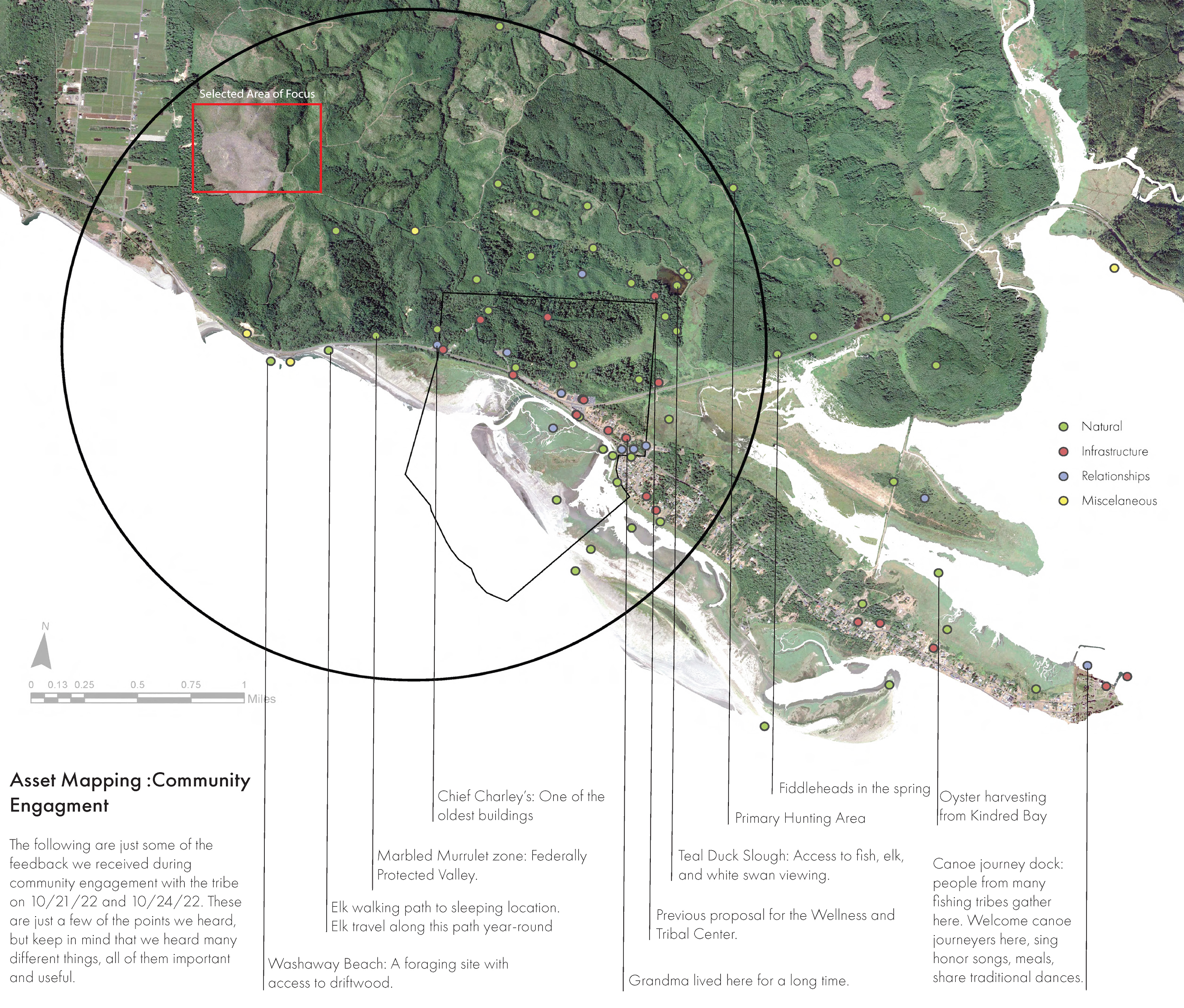
The methodology grounded design in rigorous site analysis, including seismic and topographical studies to evaluate the viability of the upland expansion area, alongside community asset mapping and engagement events that shaped every phase of the work. From this foundation, the studio developed a phased planning approach that could grow with the community over time.
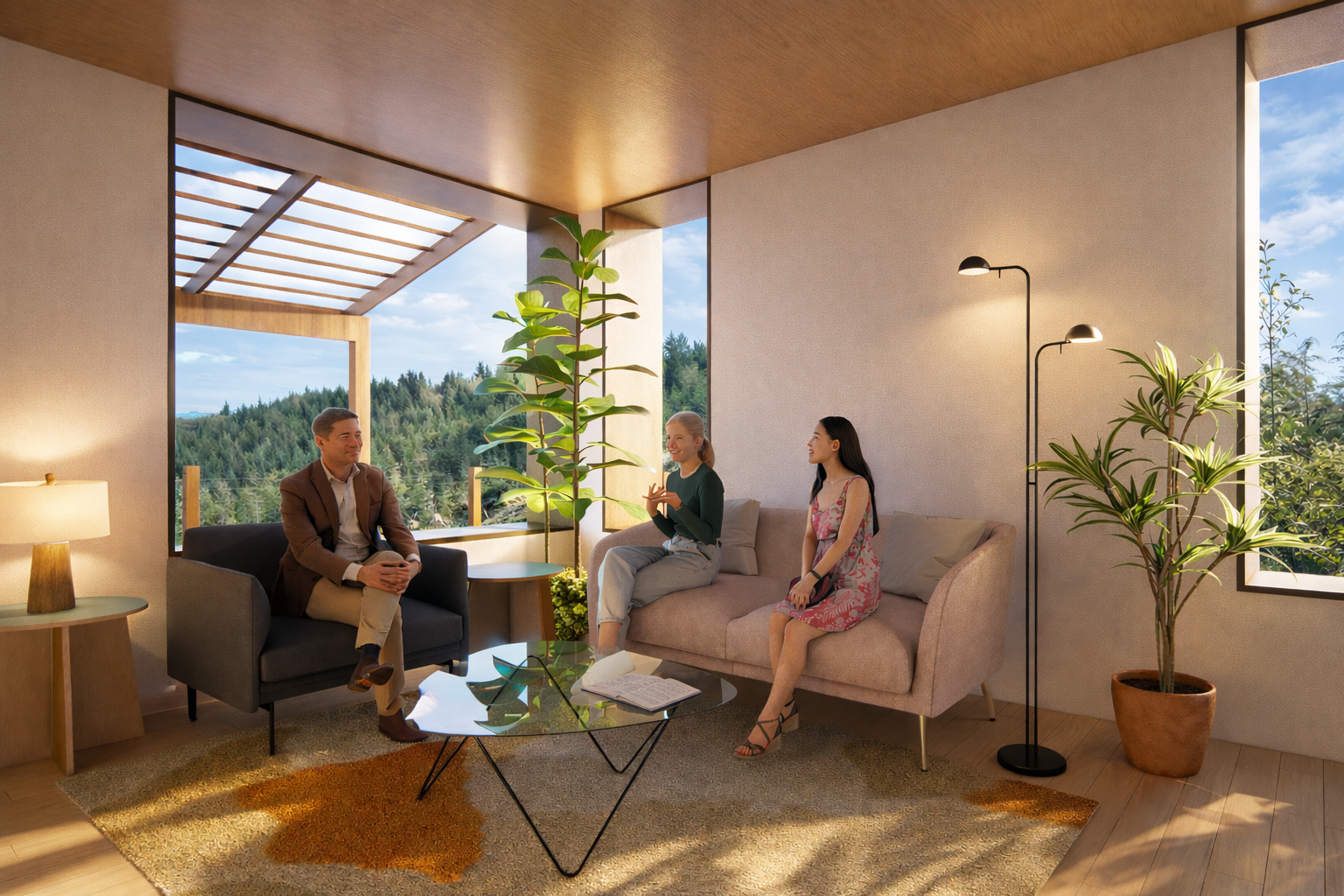
Strategies explored include resilient green buildings, green infrastructure, edible trails, food sovereignty, and health and well-being initiatives. Building proposals were guided by design for disassembly and passive house principles, and shaped by seven generations thinking, a framework that asks how decisions made today will serve the community far into the future. Intergenerational housing was a central proposal, offering flexible, multi-unit arrangements designed to bring different generations into proximity while preserving individual privacy and independence.
Work took place both at the University of Washington and on the coast through community engagement events and presentations to tribal members.
Team Members:
Architecture: Veronica Restrepo, Daquan Proctor
Urban Planning: Brian Kirk, Steven Youn
Landscape Architecture: Natalie Weiss, Emily Saeger, Yuqing Huang
Based on Places that hold significance to the community,
Drawing on places that held cultural and natural significance to the community, students across architecture, landscape architecture, and urban planning collectively mapped and evaluated a selected upland expansion area. The site was chosen to protect those significant spaces from future development.
Seismic and topographical analysis were conducted across all three disciplines to confirm the site's viability for the community's long-term expansion.
Community Engagement and Site Analysis

Coastal Communities in Retreat
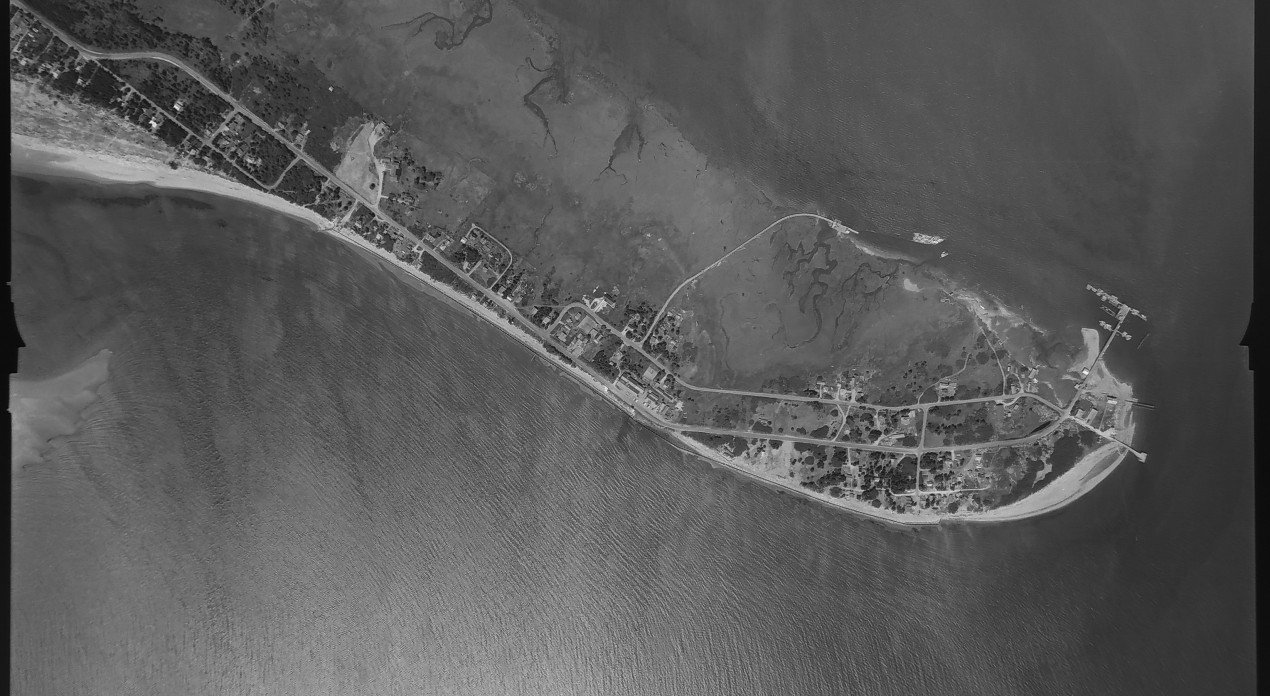
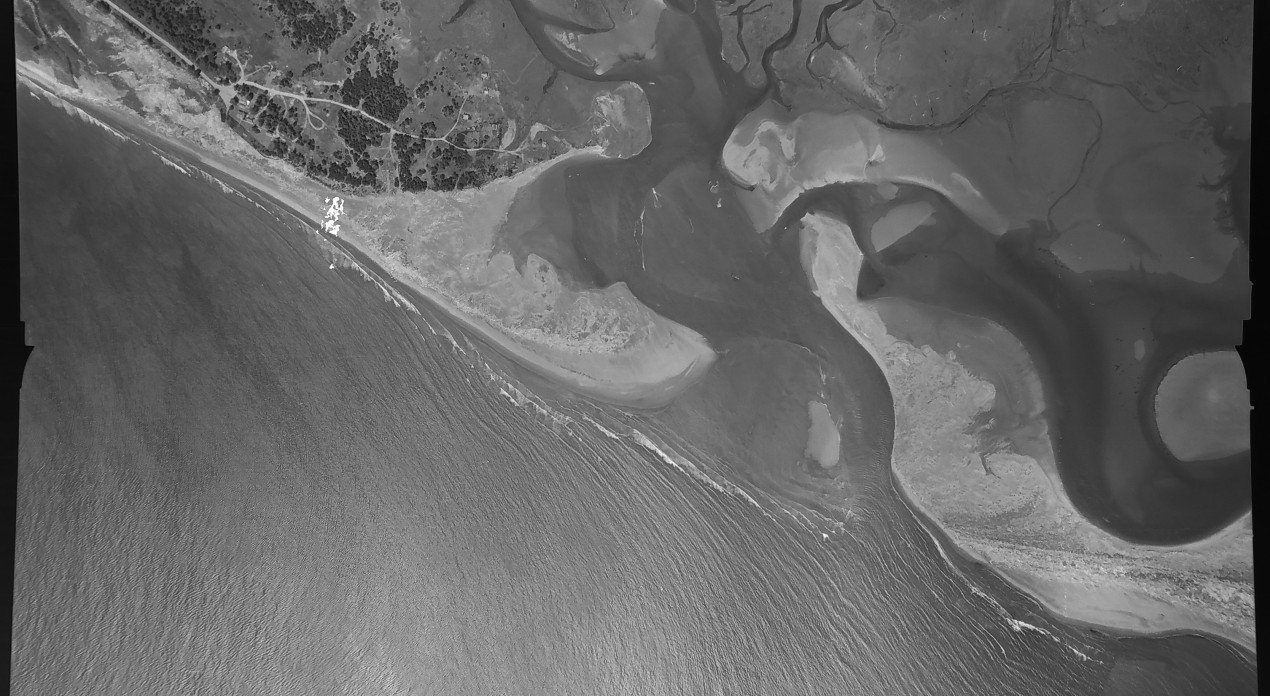
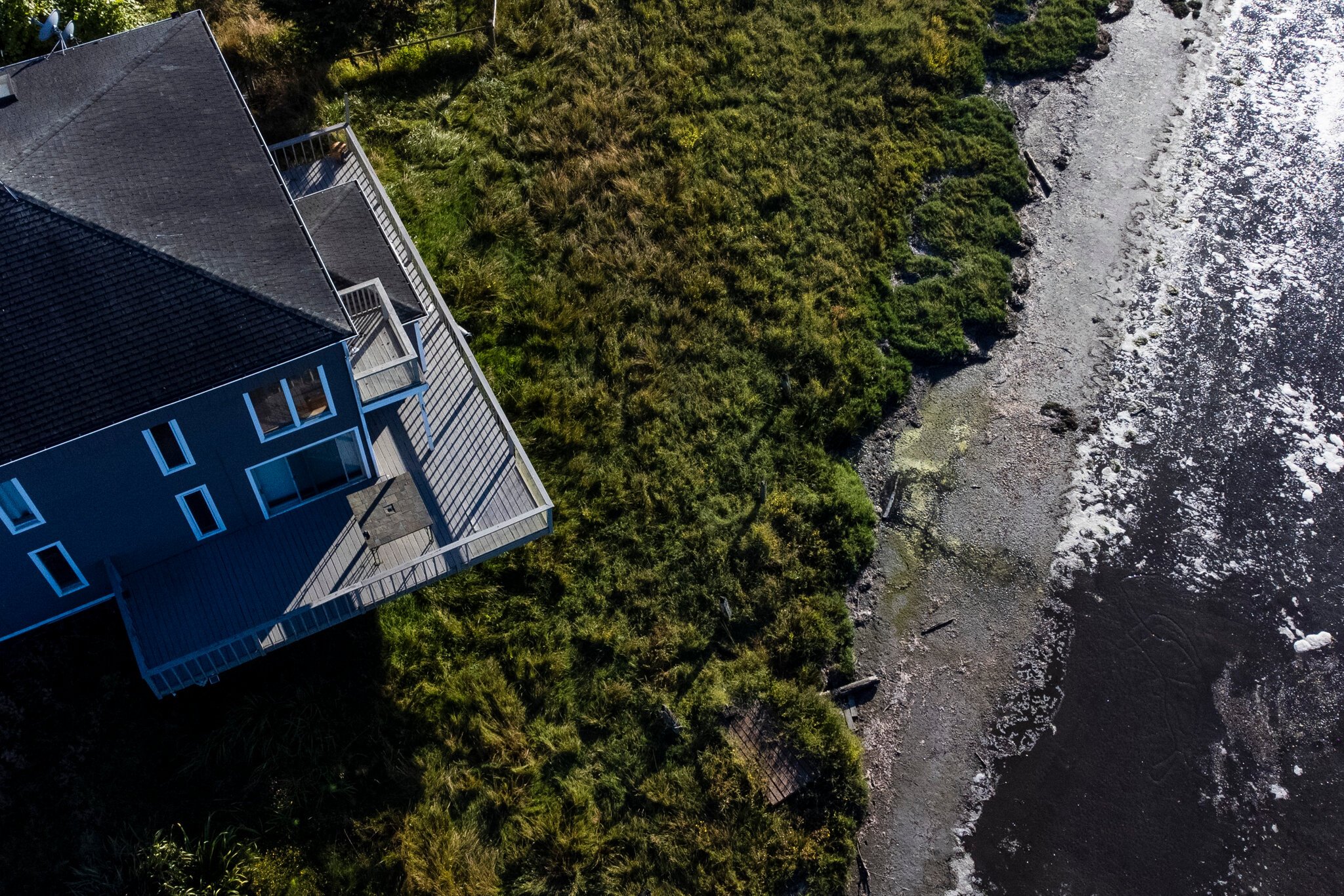
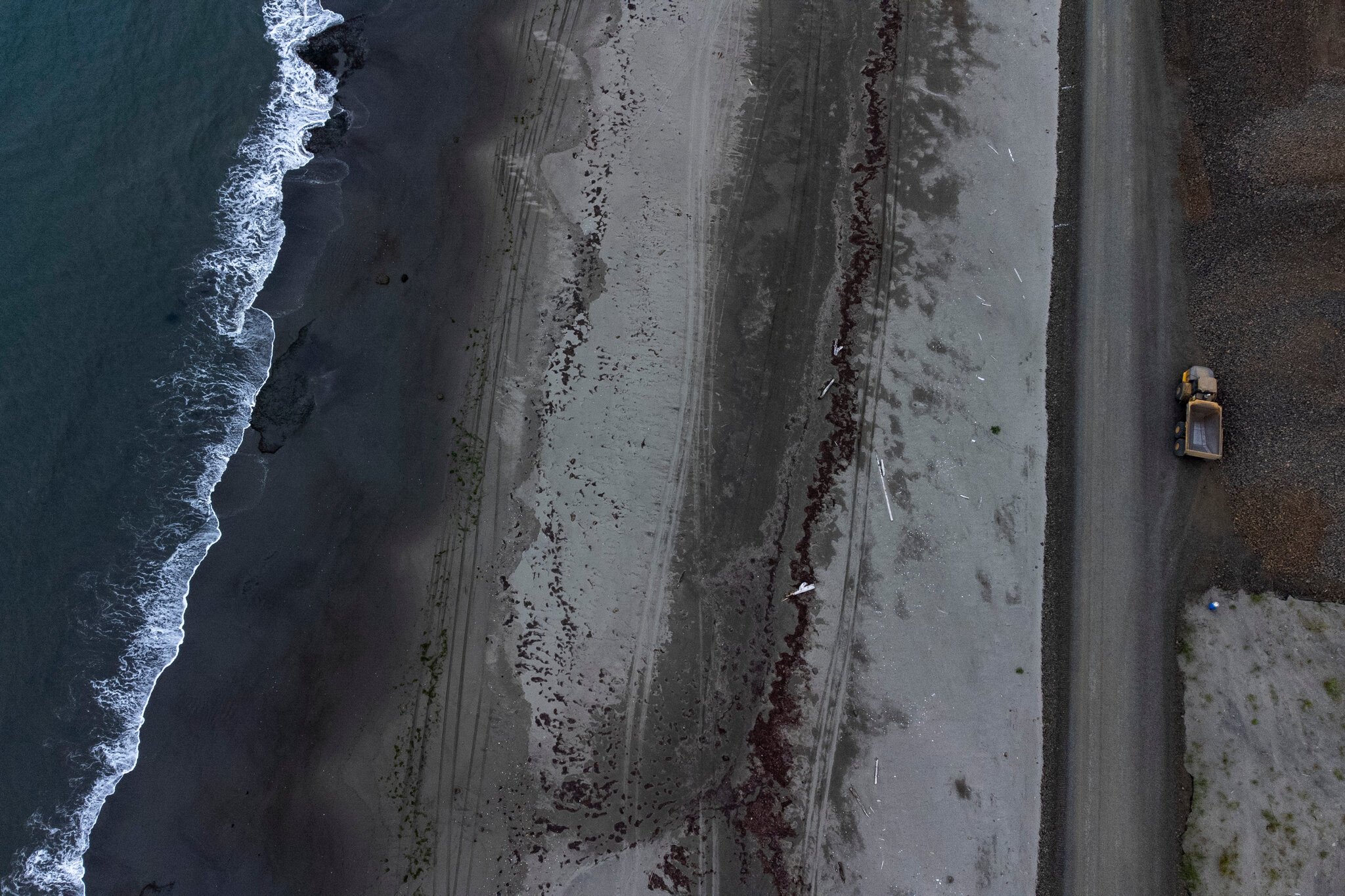
Communities along the Pacific coast are facing an accelerating loss of their homes to erosion, sea level rise, and intensifying storms. For many, the ocean claims roughly 100 feet of land per year, and protective infrastructure offers only temporary relief. The challenge for local Tribes is not just physical relocation, but doing so without severing the deep cultural ties that connect these communities to their ancestral lands.
The photographs below, by Tailyr Irvine, document this reality along Washington's Olympic Peninsula.
Read more in this New York Times Article “Here’s Where the U.S. Is Testing a New Response to Rising Seas”
The Issue



Expanding Community
The phased plan grew out of a strategic framework developed in close dialogue with the Tribe, organized around their existing goals and values for upland expansion. Rather than a fixed timeline, the phases are tied to funding availability, with the idea that plans should be ready so that when opportunities arise, the Tribe can act quickly. This urgency is shaped in part by the unpredictable nature of earthquakes and tsunamis, which, unlike gradual sea level rise, can strike without warning.
The phasing also operates within a seven generations framework, with each phase linked not just to current tribal members but to the previous three and next three generations. The goal is that by the second generation, the uplands could house everyone in the Tribe today if needed.
Phase 0.5 is the most immediate, intended to begin within the current generation. It centers on a Food and Craft Center in the uplands, a space the Tribe expressed a desire for, which can take root independently without requiring housing or administrative infrastructure nearby. Building pads established in this phase can serve flexibly as camping shelters, emergency spaces, and food storage in the interim, while roads follow existing paths to minimize land disturbance.
Phase 1 introduces a new Tribal Center alongside the first Intergenerational Housing. Residential streets wrap the outside of homes, creating interior communal spaces with trails and green areas that encourage walking and shared life. Community plantings between homes begin in this phase, so that by the time the next generation arrives, trees and native plants will have grown into the landscape around them. By the end of Phase 1, enough housing should exist to shelter all current tribal members in the event of a major earthquake or tsunami.
Phase 2 adds a Wellness Center positioned near the intergenerational housing, so that healthcare is within a short walk for elders, youth, and families. Commercial areas are placed near the site entrance to serve both tribal and non-tribal members, while more private spaces are set further in. Additional housing fills in as needed, with ample room for the next generation and for tribal members returning from across the country.
A Phased Plan


Expanding Community
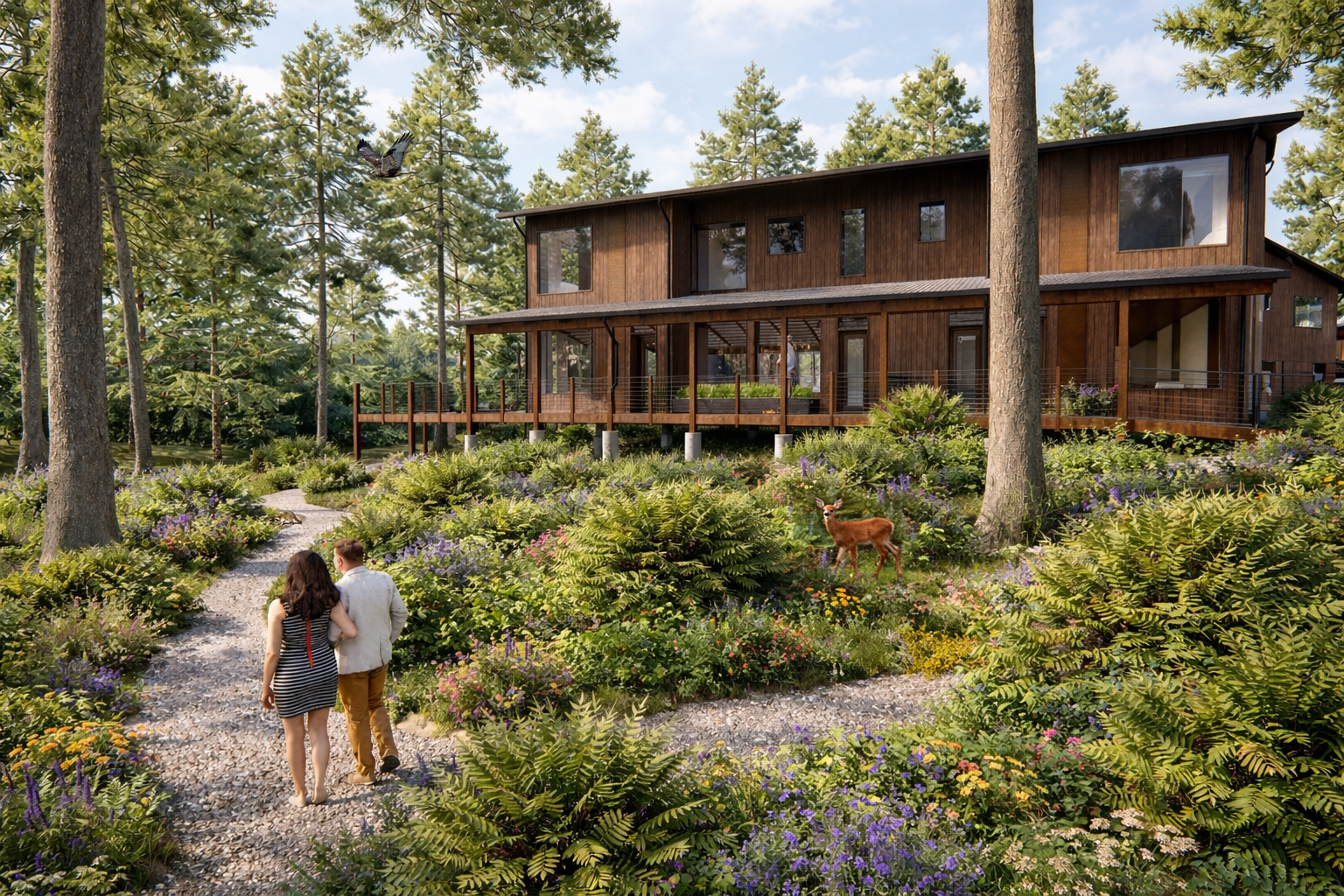
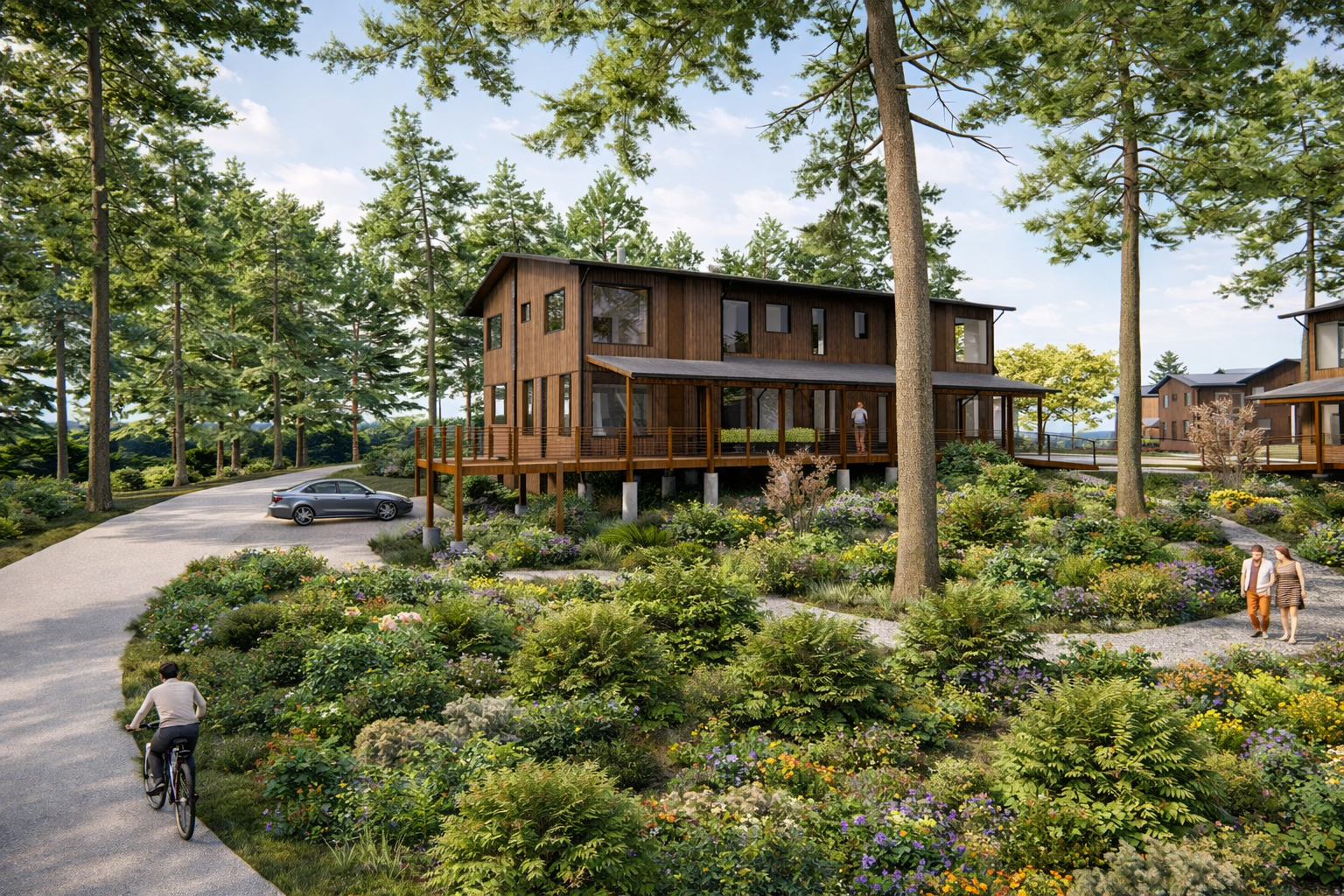
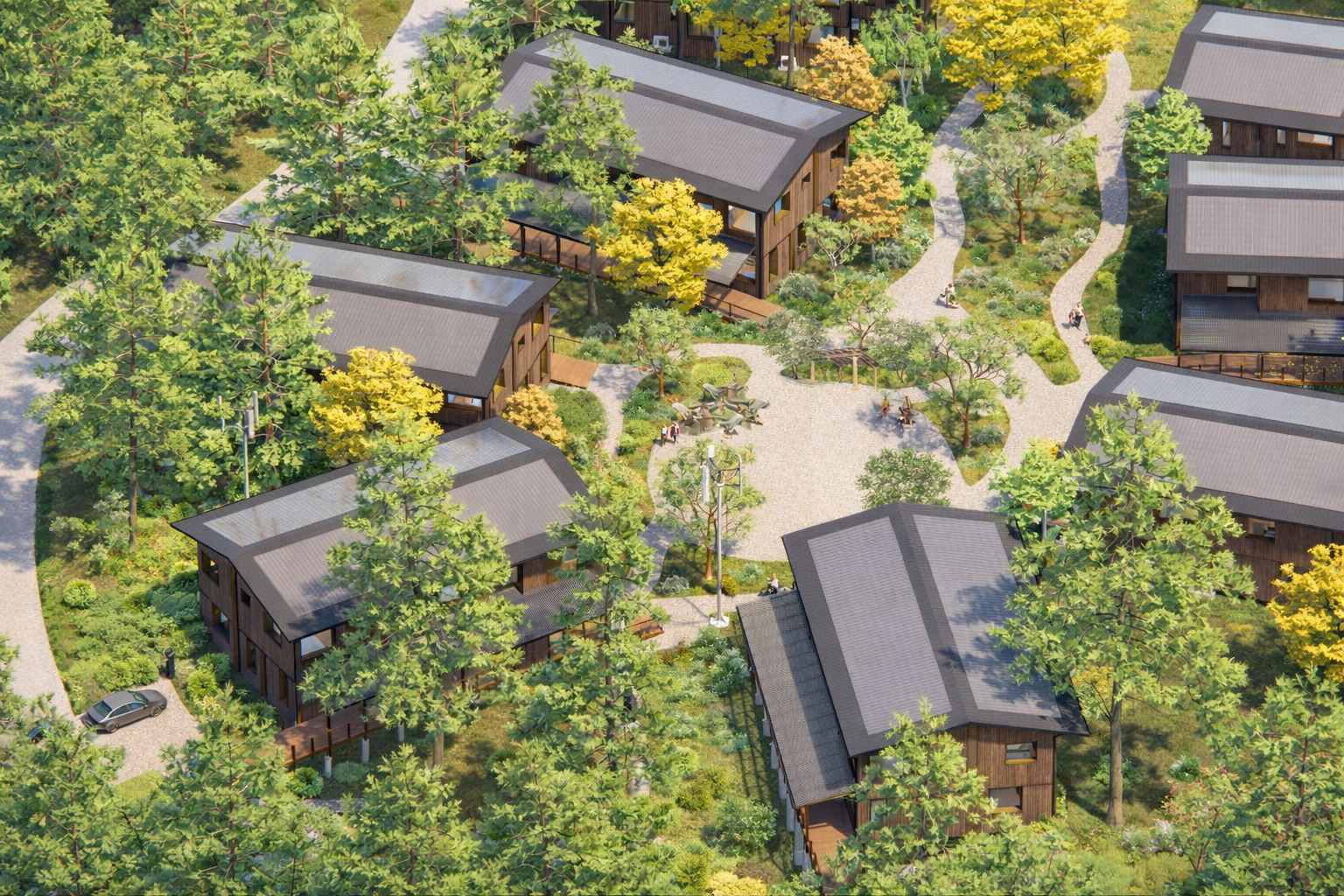
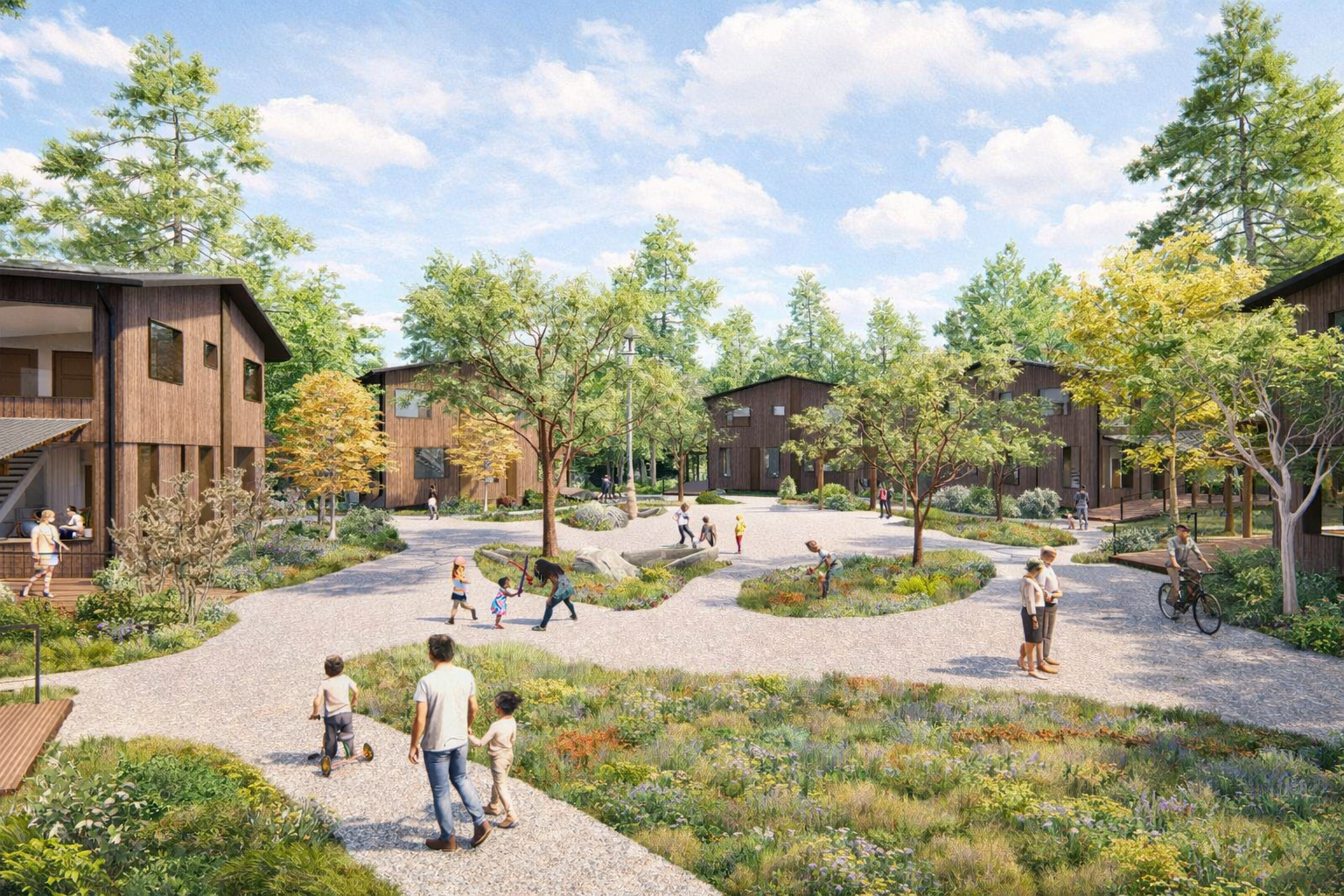
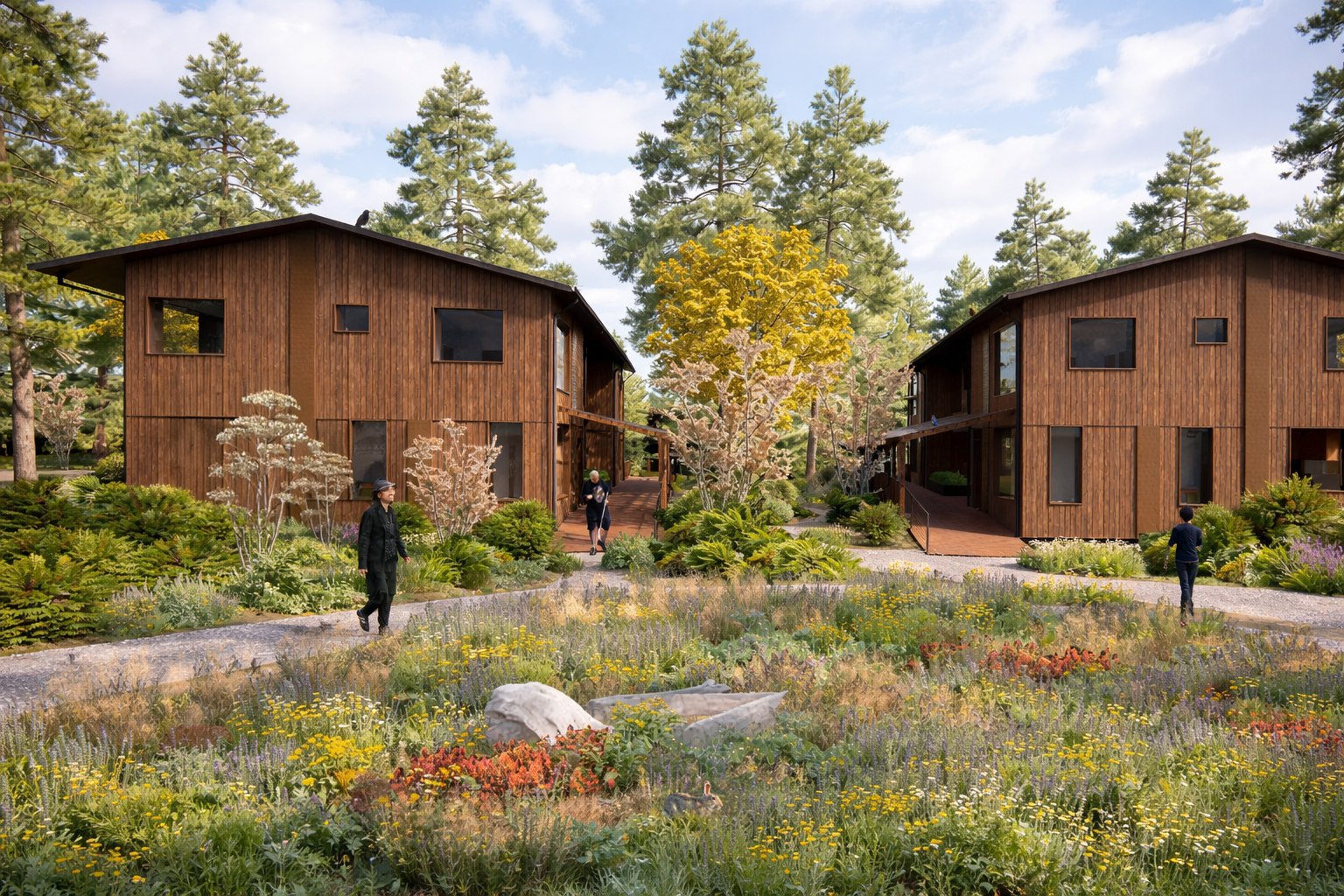
The intergenerational housing proposal came directly out of community workshops, where tribal members expressed a desire for homes that bring generations together without sacrificing independence. Four values from those conversations shaped the design: seven generations thinking, self-reliance, stewardship, and culture and community. The site sits on one of the flattest and most stable areas in the uplands, with views toward the ocean and Saddle Mountain, a place of significance in the Tribe's origin story. The landscape design mimics a forest ecosystem, with an open central meadow as the most public space, densifying toward the private residences and transitioning into restored forest ecology at the edges. At the heart of the community is a central commons with covered gathering space, a natural playground built from local driftwood, and a cedar overlook facing Saddle Mountain, accessible to all residents regardless of which unit they live in.
Intergenerational Housing

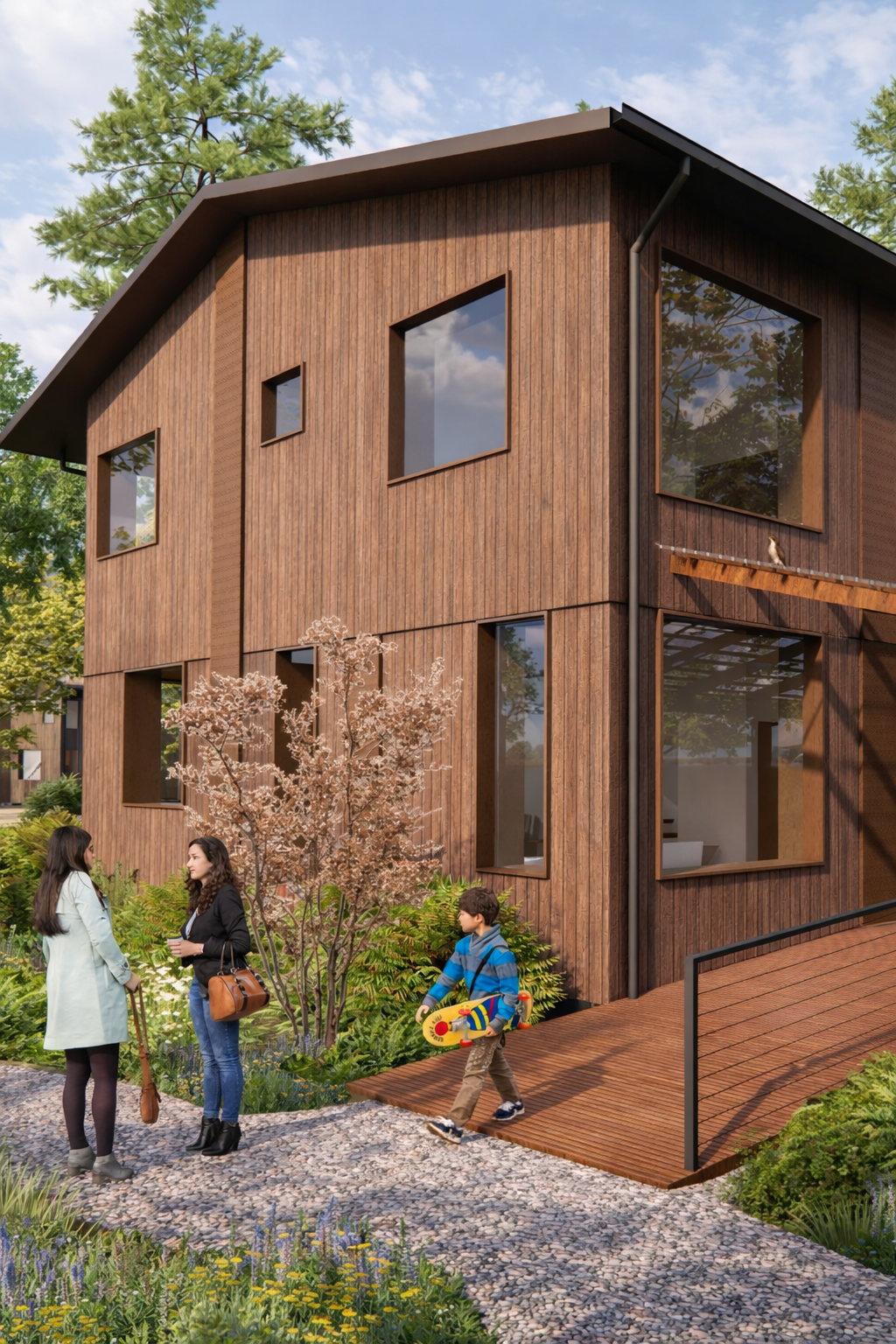
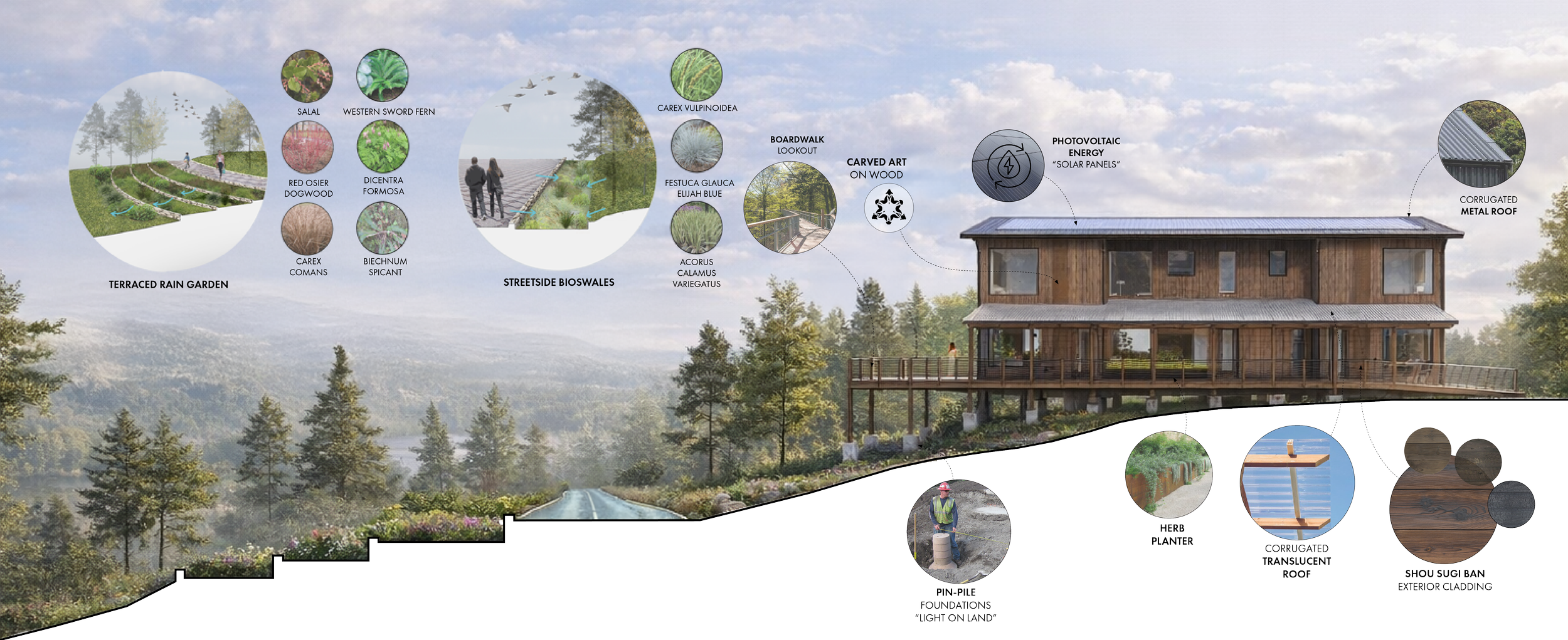
HOUSING FOR ALL
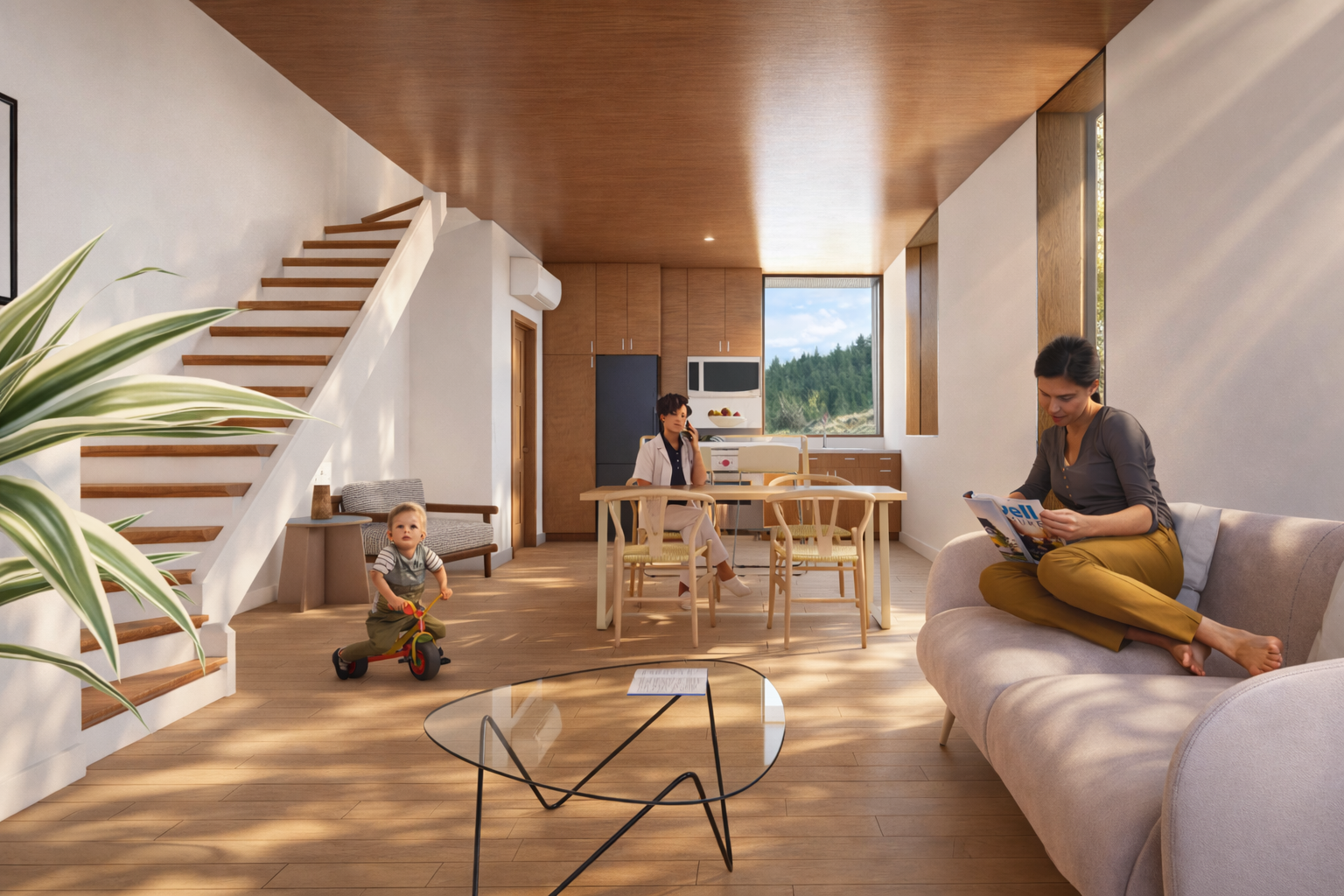
The housing clusters are designed around three unit types that can be arranged and combined in any configuration, allowing each cluster to be tailored to the needs of the family or group living there.
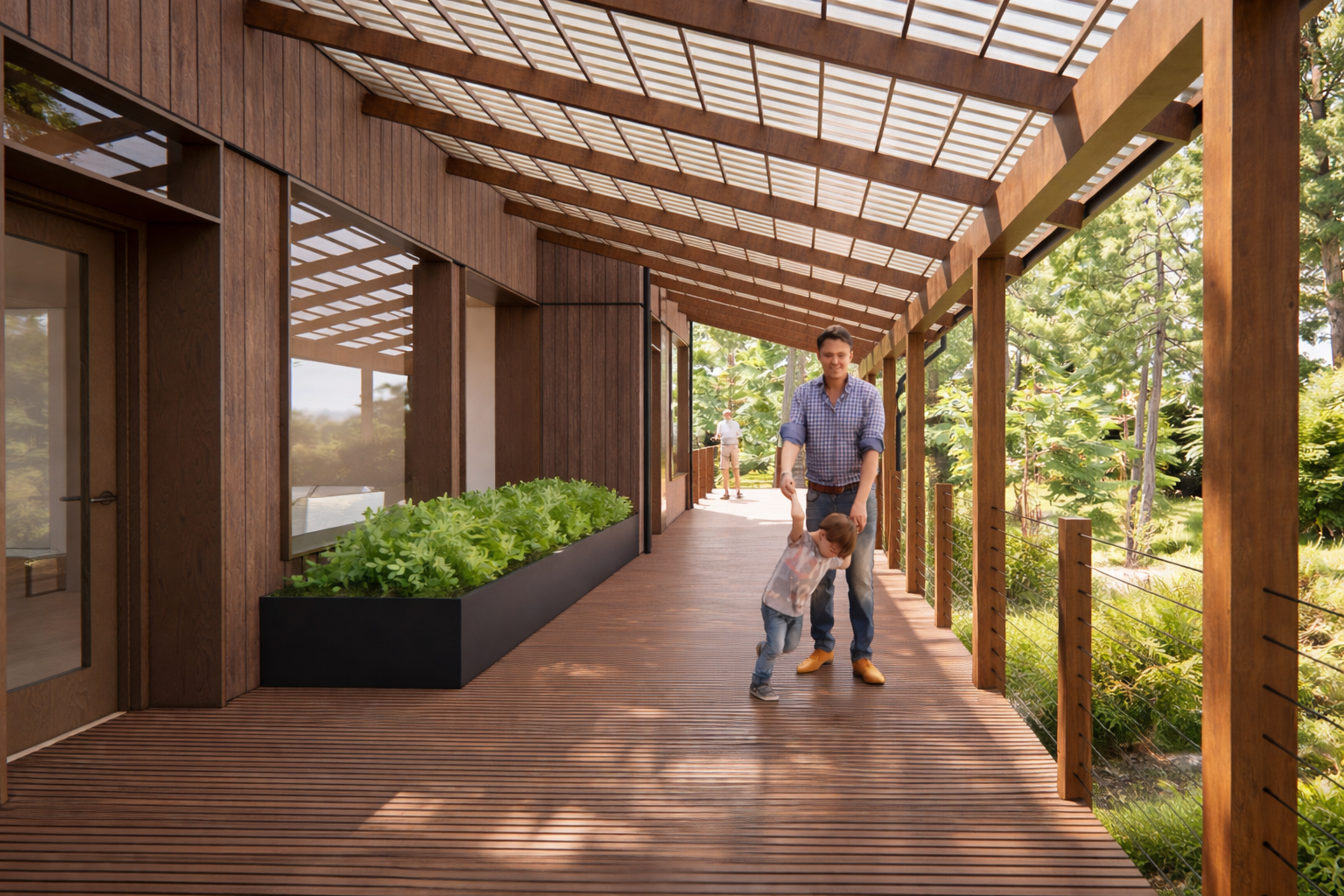
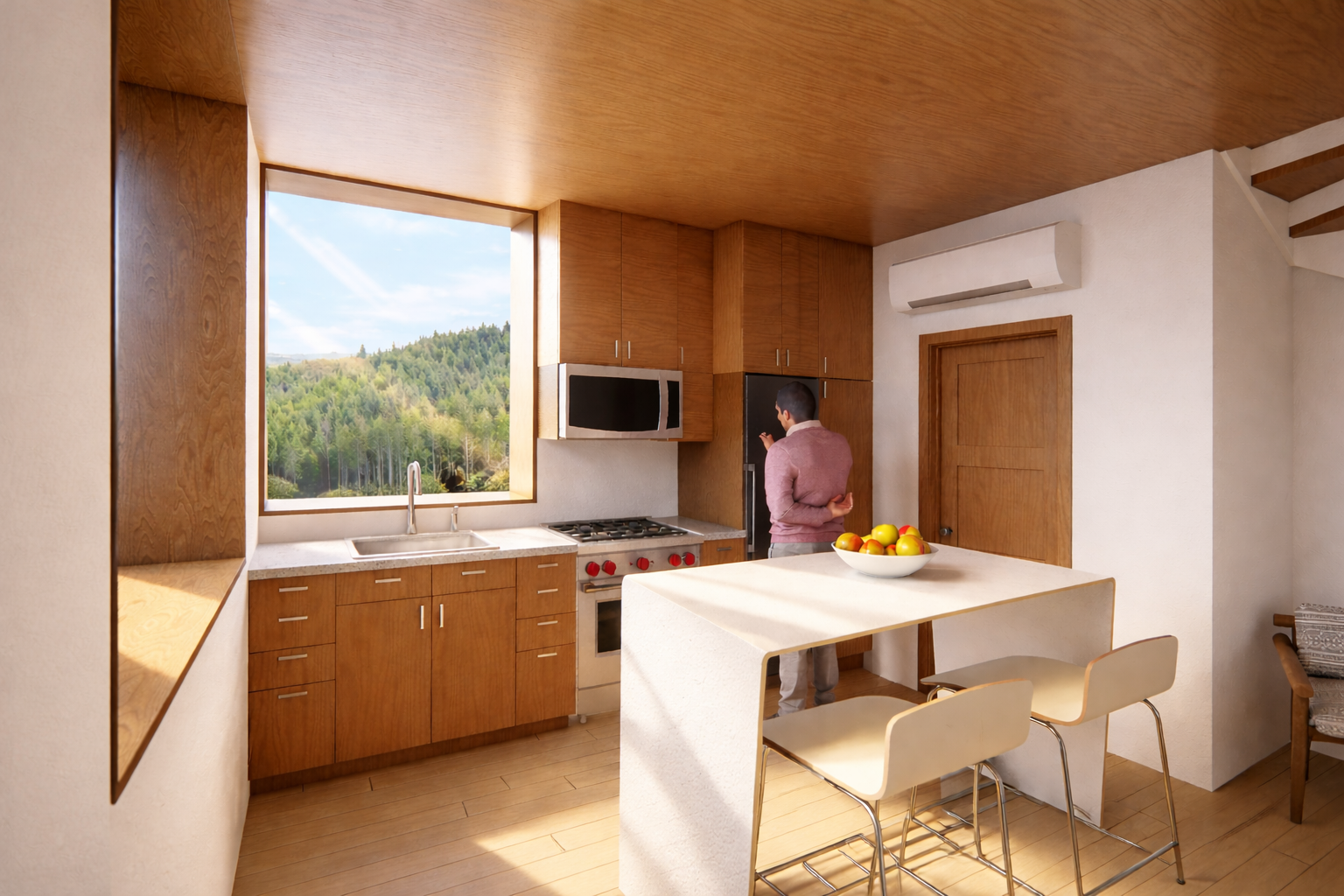
Unit 1 is a two-story home suited for a small family or individual, Unit 2 is a single-story ground-floor unit well suited for elders or anyone with mobility needs, and Unit 3 is a single-story upper-floor unit for individuals. A large extended family that wants to stay close while maintaining privacy can stack and arrange units accordingly, while a smaller household can occupy a simpler configuration. This flexibility means the housing can adapt not just across different families, but within the same family over time as needs change across generations. Each unit is connected by a shared boardwalk that terminates at a lookout point facing the upland mountains, bringing all residents together through a common path and a shared view.


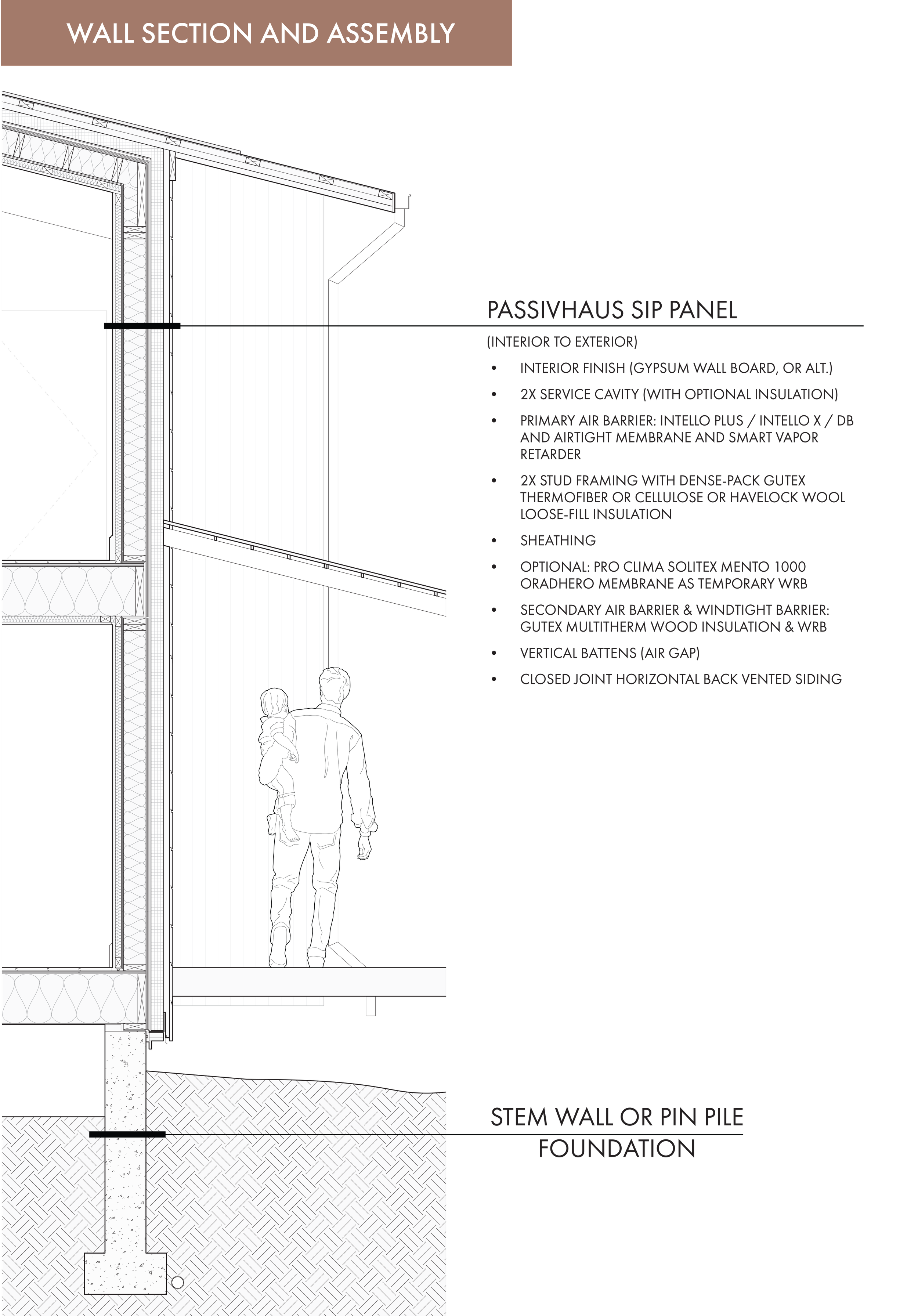
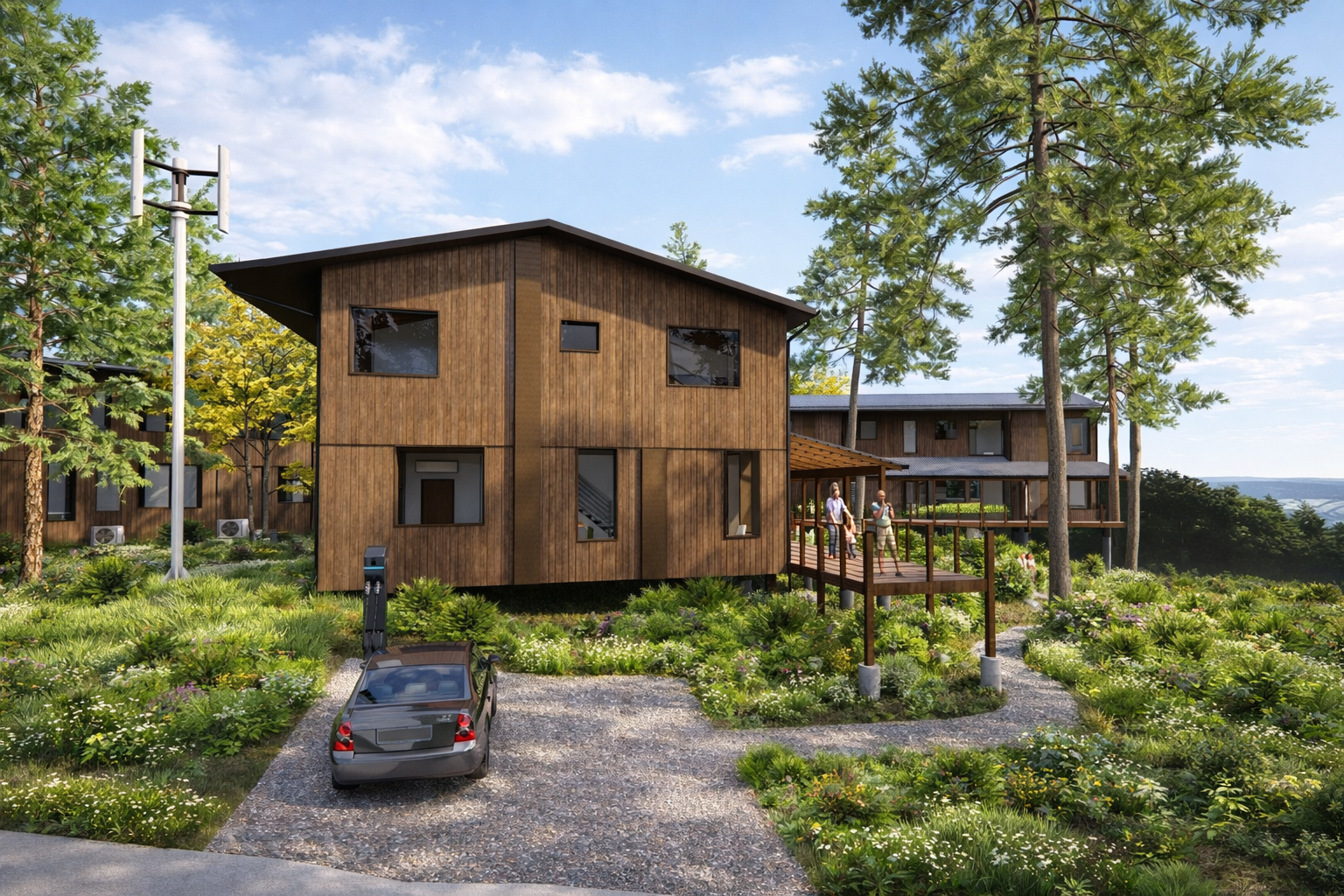
The housing follows design for disassembly and passive house principles, and is built on pin-pile foundations to sit lightly on the land. Units are arranged in flexible clusters that residents can customize and configure to suit their needs, a direct response to a tribal member's request that residents have agency over how their homes are designed and arranged.
Three unit types accommodate a range of household sizes, from small families to elders to single individuals, and each is connected by a shared boardwalk that terminates at a lookout point facing the upland mountains.
Homes include energy production systems such as PV solar panels, and the surrounding landscape manages stormwater while restoring native plant habitat for future generations.